Building a high-performing sales force? A commission based sales team might be the game-changer you’re looking for. This model drives motivation, aligns incentives, and scales with growth—all while keeping costs lean.
What Is a Commission Based Sales Team?

A commission based sales team operates on a performance-driven compensation model where earnings are directly tied to sales results. Unlike salaried roles, these sales professionals earn a percentage of the revenue they generate, making their income variable and directly linked to effort and outcome.
How Commission Structures Work
At its core, a commission structure rewards salespeople for closing deals. The commission rate can vary—typically between 5% to 30%—depending on the industry, product complexity, and profit margins. For example, real estate agents often earn 2–3% per sale, while tech SaaS sales reps might earn 10–20% on new contracts.
- Revenue-based commissions: A percentage of total sales value.
- Profit-based commissions: Based on the net profit from a sale.
- Hybrid models: Combine base salary with commission (commonly called ‘draw against commission’).
According to Investopedia, commission-based pay is widely used in industries where direct sales impact is measurable and significant.
Types of Commission Models
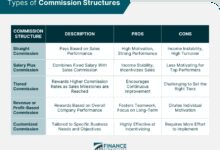
There are several ways to structure a commission based sales team. Choosing the right model depends on your business goals, product lifecycle, and team dynamics.
- Straight Commission: No base salary; 100% of income comes from sales. High risk, high reward.
- Base Plus Commission: A guaranteed base salary with additional commission on top. Offers stability and incentive.
- Residual Commission: Ongoing payments for recurring revenue (e.g., subscriptions).
- Tiered Commission: Rates increase as sales targets are met or exceeded.
“The best sales compensation plans align the seller’s goals with the company’s strategic objectives.” — WorldatWork, a global human resources association.
Top 7 Benefits of a Commission Based Sales Team
Implementing a commission based sales team isn’t just about cutting costs—it’s about creating a culture of accountability, performance, and growth. Here are seven powerful advantages that make this model a favorite among startups and enterprise-level companies alike.
1. Higher Motivation and Productivity
When income is directly tied to performance, sales reps are naturally more driven to close deals. The psychological principle of extrinsic motivation plays a key role here: the promise of financial reward fuels effort and persistence.
Studies from the Harvard Business Review show that performance-based pay increases effort, especially in roles with clear output metrics like sales. A commission based sales team often outperforms salaried teams in terms of activity levels—more calls, more meetings, faster follow-ups.
commission based sales team – Commission based sales team menjadi aspek penting yang dibahas di sini.
- Sales reps self-manage their time to maximize results.
- Top performers are rewarded proportionally, encouraging healthy competition.
- Low performers are naturally filtered out over time.
2. Cost-Effective for Growing Businesses
For startups and small businesses, cash flow is critical. A commission based sales team reduces fixed payroll expenses. You only pay when revenue is generated, making it a scalable and sustainable model.
Imagine hiring five sales reps on a $50,000 annual salary—that’s $250,000 in fixed costs. But with a base-plus-commission model at $30,000 base + 10% commission, you only pay more when they sell. If they don’t perform, your risk is minimized.
“Variable compensation allows companies to align expenses with revenue, especially during early growth phases.” — Forbes Finance Council
3. Attracts Self-Starter Personalities
Commission based sales roles naturally attract ambitious, goal-oriented individuals. These are people who thrive on challenge, enjoy autonomy, and are driven by results. They don’t wait for direction—they create opportunities.
This self-selection process means you’re more likely to build a team of proactive problem-solvers. In contrast, salaried roles may attract candidates seeking stability over performance, which can dilute sales culture.
- High-commission roles appeal to competitive, entrepreneurial minds.
- Reduces dependency on micromanagement.
- Encourages ownership of sales pipelines and customer relationships.
4. Performance Is Easily Measurable
With a commission based sales team, performance isn’t subjective. Sales numbers, conversion rates, and revenue generated are clear, quantifiable metrics. This transparency makes it easier to evaluate, reward, and coach team members.
Tools like CRM systems (e.g., Salesforce or HubSpot) integrate seamlessly with commission tracking, providing real-time insights into individual and team performance.
- Managers can identify top performers quickly.
- Underperformers can be coached or replaced based on data.
- Commission reports provide audit trails for payroll and compliance.
5. Scalability Without Proportional Cost Increases
As your business grows, a commission based sales team scales efficiently. Hiring additional reps doesn’t immediately increase fixed costs. Instead, new hires earn as they sell, allowing revenue to fund expansion.
This model is especially effective in industries with high customer acquisition potential, such as SaaS, real estate, insurance, and direct sales. You can expand into new markets with minimal upfront investment in payroll.
commission based sales team – Commission based sales team menjadi aspek penting yang dibahas di sini.
“Scalability is the hallmark of a well-designed commission structure.” — Inc. Magazine
6. Stronger Alignment with Company Goals
When sales reps earn based on what they sell, their interests align with the company’s revenue objectives. There’s no disconnect between effort and reward. This alignment fosters a culture of shared success.
For example, if your company wants to push a high-margin product, you can increase the commission rate on that item. The team will naturally prioritize it, driving strategic outcomes without top-down mandates.
- Incentive adjustments can guide behavior (e.g., rewarding upsells or long-term contracts).
- Teams focus on profitable sales, not just volume.
- Encourages collaboration when team-based commissions are used.
7. Encourages Continuous Improvement
In a commission based sales team, reps are constantly looking for ways to improve their close rates, shorten sales cycles, and increase deal size. This drives organic investment in skill development, CRM usage, and customer relationship management.
Many top performers attend sales training, study negotiation tactics, and refine their pitch—all without company mandates. Their income depends on it.
- Reps seek feedback to improve performance.
- Adoption of sales tools increases due to efficiency gains.
- Lifelong learning becomes a survival mechanism, not just a perk.
Common Challenges of a Commission Based Sales Team
While the benefits are compelling, a commission based sales team isn’t without its challenges. Understanding these pitfalls is crucial for designing a sustainable and fair compensation plan.
High Turnover and Burnout Risk
The pressure to perform can lead to burnout, especially in straight-commission roles. Without a safety net, reps may leave during slow periods. This turnover increases recruitment and training costs.
A study by CBS News found that sales roles have some of the highest turnover rates—up to 30% annually. Poorly structured commission plans can exacerbate this.
- Lack of income stability causes stress and attrition.
- New reps may struggle during ramp-up periods.
- Top talent may leave for more stable opportunities.
“The most successful sales teams balance performance incentives with psychological safety.” — Psychology Today
Short-Term Focus Over Long-Term Relationships
When commissions are paid only on initial sales, reps may prioritize quick closes over customer satisfaction or retention. This can harm long-term brand reputation and reduce customer lifetime value (CLV).
commission based sales team – Commission based sales team menjadi aspek penting yang dibahas di sini.
For example, a rep might oversell a product to close a deal, leading to post-sale dissatisfaction. This is especially risky in subscription-based businesses where churn is a key metric.
- Reps may neglect account management after the sale.
- Customer success becomes secondary to acquisition.
- Upsell and renewal rates may suffer.
Perceived Unfairness in Commission Payouts
If the commission structure is unclear or inconsistently applied, it can breed distrust. Reps may feel cheated if deals are disputed, payouts delayed, or team contributions ignored.
Transparency is key. Companies must have clear policies on how commissions are calculated, when they’re paid, and how disputes are resolved.
- Complex formulas can confuse or frustrate reps.
- Lack of visibility into commission tracking leads to disputes.
- Team vs. individual credit can cause internal conflict.
How to Design an Effective Commission Based Sales Team
Creating a successful commission based sales team requires more than just slapping a percentage on sales. It demands strategic planning, clear communication, and ongoing optimization.
Set Clear, Achievable Goals
Start by defining what success looks like. Are you focused on new customer acquisition, upselling, or recurring revenue? Your goals should directly influence the commission structure.
Use SMART goals (Specific, Measurable, Achievable, Relevant, Time-bound) to guide your plan. For example: “Increase enterprise SaaS sales by 25% in Q3 by offering a 15% commission on deals over $10,000.”
- Align commission targets with business KPIs.
- Break down annual goals into quarterly or monthly milestones.
- Communicate goals clearly to the sales team.
Choose the Right Commission Model
Not all businesses should use the same model. Consider your industry, sales cycle, and product type.
- Short sales cycle? Straight commission or base-plus may work.
- Long sales cycle? Consider a draw against commission or spiffs (short-term bonuses).
- Recurring revenue? Use residual commissions to reward retention.
For example, Shopify recommends residual commissions for subscription-based businesses to incentivize long-term customer success.
commission based sales team – Commission based sales team menjadi aspek penting yang dibahas di sini.
Ensure Transparency and Trust
Nothing kills morale faster than a black-box commission system. Reps need to see how their earnings are calculated in real time.
Implement a commission tracking dashboard where reps can log in and view their sales, pending payouts, and commission calculations. Tools like Xactly or Commissionly offer this functionality.
- Provide regular commission statements.
- Offer a clear dispute resolution process.
- Train managers to explain the plan thoroughly.
“Transparency in compensation builds trust, which drives engagement and performance.” — SHRM (Society for Human Resource Management)
Real-World Examples of Successful Commission Based Sales Teams
Many of today’s most successful companies rely on commission based sales teams to drive growth. Let’s look at a few notable examples.
Salesforce: Base Plus Commission with Quotas
Salesforce, a leader in CRM software, uses a base-plus-commission model with aggressive but achievable quotas. Reps earn bonuses for exceeding targets, and leadership roles include equity incentives.
Their model emphasizes long-term performance, with commissions tied to customer retention and expansion, not just new sales.
- Quotas are set quarterly and annually.
- Commissions range from 5% to 20% depending on product and deal size.
- Team-based incentives encourage collaboration.
Learn more at Salesforce Careers.
Southwestern Consulting: Straight Commission for Entrepreneurs
This sales training and development firm hires college students and young professionals on a straight-commission basis. It’s designed to attract self-starters who want to build sales skills fast.
While risky, the model has produced thousands of successful sales professionals. Top performers earn six figures in a single summer.
commission based sales team – Commission based sales team menjadi aspek penting yang dibahas di sini.
- No base salary—earnings are 100% performance-based.
- Intensive training provided upfront.
- High turnover, but high reward for top talent.
Insurance Agencies: Residual Commissions for Long-Term Growth
Many insurance sales teams operate on residual commissions. Agents earn an initial commission when a policy is sold, then a smaller percentage each year the client renews.
This model rewards long-term customer relationships and encourages agents to provide ongoing service.
- Builds a passive income stream for agents.
- Aligns with customer retention goals.
- Reduces churn through relationship management.
Legal and Ethical Considerations for a Commission Based Sales Team
While commission structures are powerful, they must comply with labor laws and ethical standards. Missteps can lead to lawsuits, reputational damage, and employee dissatisfaction.
Compliance with Labor Laws
In the U.S., the Fair Labor Standards Act (FLSA) governs how commission-based employees are paid. Non-exempt employees must earn at least minimum wage when commissions are averaged over a pay period.
If a rep’s commission falls below minimum wage, the employer must make up the difference. This is known as a ‘draw reconciliation.’
- Keep accurate records of hours and earnings.
- Understand state-specific rules (e.g., California has strict commission agreements).
- Provide written commission plans to all sales staff.
For guidance, refer to the U.S. Department of Labor.
Written Commission Agreements
To avoid disputes, always use a written commission agreement. This document should outline:
- Commission rate and calculation method.
- Payment schedule (e.g., monthly, quarterly).
- Clawback policies (if any).
- What happens if a rep leaves the company (e.g., earned but unpaid commissions).
“A verbal commission promise is not enough. Always get it in writing.” — Nolo Legal Resources
Ethical Incentive Design
While you want to drive sales, avoid structures that encourage unethical behavior. For example, over-commissioning on a single product might lead reps to mislead customers.
commission based sales team – Commission based sales team menjadi aspek penting yang dibahas di sini.
- Avoid unrealistic quotas that pressure reps into dishonesty.
- Monitor for customer complaints related to sales tactics.
- Reward ethical behavior and customer satisfaction, not just revenue.
Future Trends in Commission Based Sales Teams
The world of sales compensation is evolving. Technology, remote work, and changing workforce expectations are reshaping how commission based sales teams operate.
Rise of AI and Commission Tracking
Artificial intelligence is transforming commission management. AI-powered platforms can now predict sales performance, optimize commission rates, and detect anomalies in payout data.
Tools like Gong analyze sales calls to assess performance and suggest commission adjustments based on deal quality, not just closure.
- AI reduces manual errors in commission calculations.
- Real-time feedback helps reps improve.
- Predictive analytics can forecast earnings and motivation levels.
Hybrid and Remote Sales Teams
With the rise of remote work, commission based sales teams are becoming more geographically diverse. Companies can now hire top talent from anywhere, paying them based on results, not location.
This flexibility increases access to global markets and reduces overhead. However, it requires robust digital tools for tracking, communication, and compliance across jurisdictions.
- Use cloud-based CRM and commission software.
- Adapt commission plans for regional market differences.
- Ensure legal compliance in remote employment.
Focus on Holistic Performance Metrics
The future of commission plans isn’t just about revenue. Companies are increasingly tying commissions to customer satisfaction, retention, and product adoption.
For example, a SaaS company might pay 10% commission on new sales, but an additional 2% if the customer reaches 90% product usage in the first 60 days.
- Encourages reps to sell the right solution, not just any solution.
- Improves customer success and reduces churn.
- Aligns sales with overall business health.
What is the best commission rate for a sales team?
commission based sales team – Commission based sales team menjadi aspek penting yang dibahas di sini.
The ideal commission rate depends on your industry, profit margins, and sales cycle. Most companies offer between 5% and 30%. High-margin products can support higher rates, while low-margin, high-volume businesses may use lower percentages with volume bonuses.
Should I offer a base salary with commission?
Yes, for most businesses. A base salary provides stability, reduces turnover, and attracts higher-quality candidates. The base-plus-commission model balances risk and reward, making it the most popular choice for sustainable sales teams.
How do I prevent commission disputes?
Prevent disputes by using a written commission plan, providing real-time tracking tools, and establishing a clear dispute resolution process. Transparency and consistency are key to maintaining trust.
Can commission based sales teams work remotely?
Absolutely. In fact, remote commission based sales teams are increasingly common. With digital tools for CRM, communication, and commission tracking, performance can be managed effectively regardless of location.
What happens to unpaid commissions if a salesperson quits?
commission based sales team – Commission based sales team menjadi aspek penting yang dibahas di sini.
Legally, if a commission was earned before resignation, it must be paid. This is governed by state laws and the terms of the commission agreement. Always specify payout policies in writing to avoid legal issues.
Building a commission based sales team is one of the most powerful strategies for driving revenue growth while maintaining cost efficiency. When designed thoughtfully, this model motivates top performers, aligns with business goals, and scales with success. However, it requires careful planning, transparency, and ongoing management to avoid common pitfalls. By understanding the benefits, challenges, and best practices outlined in this guide, you can create a high-performing sales force that delivers results year after year.
Further Reading:
